WHY POLYURETHANE SUSPENSION BUSHES?
Time to do some sums…
 Polyurethanes have been with us since the late 1930s, however, recent advances have now made it possible to engineer very special properties into this exciting material.
Suspension bushes are some of the most highly stressed components fitted to a motor car. They undergo enormous strains and in the most arduous of conditions with no maintenance or lubrication.
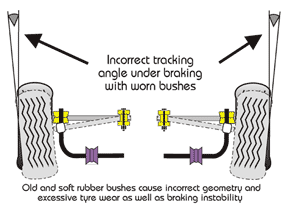
The material they are manufactured from is a rubber compound containing natural products that deteriorate with age. It becomes softer and more pliable, resisting the forces placed on it less and less. Therefore allowing more and more movement of suspension components and offering less and less control over the suspension geometry.
This in turn causes accelerated tyre wear, braking instability, and poor handling. This is the single biggest reason you can instantly tell the difference driving a three-year-old car compared to a showroom new one. However, even new cars will benefit from POWERFLEX bushes because of the superior design they offer much more effective control of the suspension components to a much greater extent than normal rubber items.
With the technological advances in this material, it has been possible to overcome the common problem associated with harder bushes which is increased noise. By correctly engineering the polyurethane compound, bushes can be made 25-30% stiffer than new rubber items but with exactly the same noise absorbing properties.
- POWERFLEX bushes make sense.
- POWERFLEX for improved performance.
- POWERFLEX for increased safety.
- POWERFLEX for prolonged tyre life.
Powerflex testing from Powerflex on Vimeo.


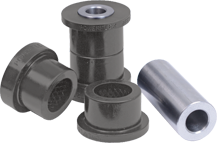

- Design for track
- Ready to Race
- Engineered to the best
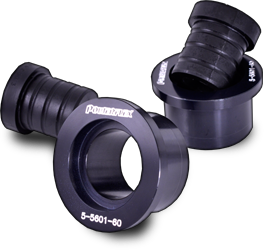

Contact Us for all your bush suspension solutions
We are very proud to be a certified ISO9001 company and receiver of the Queens’s Award for Enterprise and international trade 2013


8th July 2016
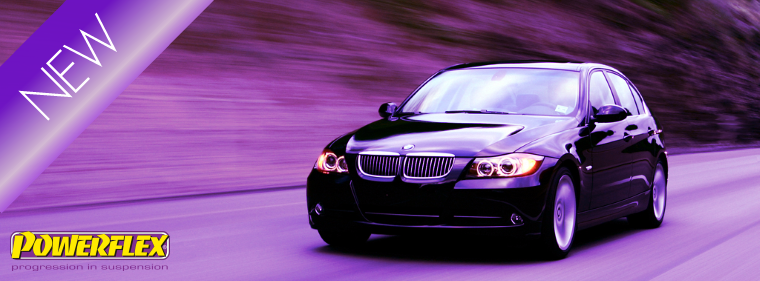
NL2016-26 BMW E9* xDrive, E84 X1This week we are introducing two new part numbers to fit xDrive, 4WD models of the BMW 3 Series E90, E91, E92 and the X1 E84.
Read more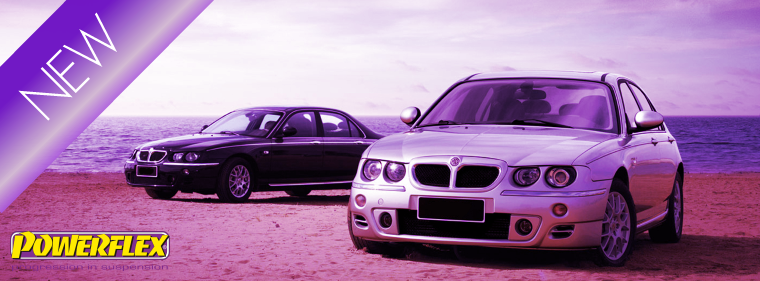
1st July 2016
NL2016-25 MG ZT260 & Rover 75 V8This week we are adding to our range of parts available for the MG ZT260 and Rover 75 V8. These two models both squeeze a Mustang V8 into a shared platform featuring rear wheel drive and 260bhp.
Read more